
Ontario winters are hard on heavy equipment. Hydraulic fluid thickens, seals contract and stiffen, batteries lose cranking power, and untreated diesel can gel in the tank and plug a fuel filter solid. The result is predictable: a repair that costs eight hundred dollars in October routinely becomes a multi-thousand-dollar emergency in January — plus the lost production while the machine sits idle in the cold waiting for a part.
The good news is that most winter breakdowns are not bad luck. They are deferred maintenance with a date stamp, and they are preventable on a schedule. Here is the case for pre-winter service, the checklist we run, and the numbers that make it an easy decision.
Why repair costs multiply in the cold
Two separate forces push winter repair costs up at the same time.
First, cold finds every weak component. A seal that was weeping in October lets go completely at minus twenty. A battery sitting at 70 percent capacity in the fall cannot crank a cold diesel in January. Fluid that is one grade too heavy makes a cold pump work against itself. The marginal parts you could have replaced on your schedule fail on winter's schedule instead.
Second, timing works against you. Emergency winter call-outs compete for limited technician time during the busiest, harshest stretch of the year. You pay more for the part because it is urgent, more for the labour because it is an emergency, and most of all for the production you lose while a machine sits dead in a yard.
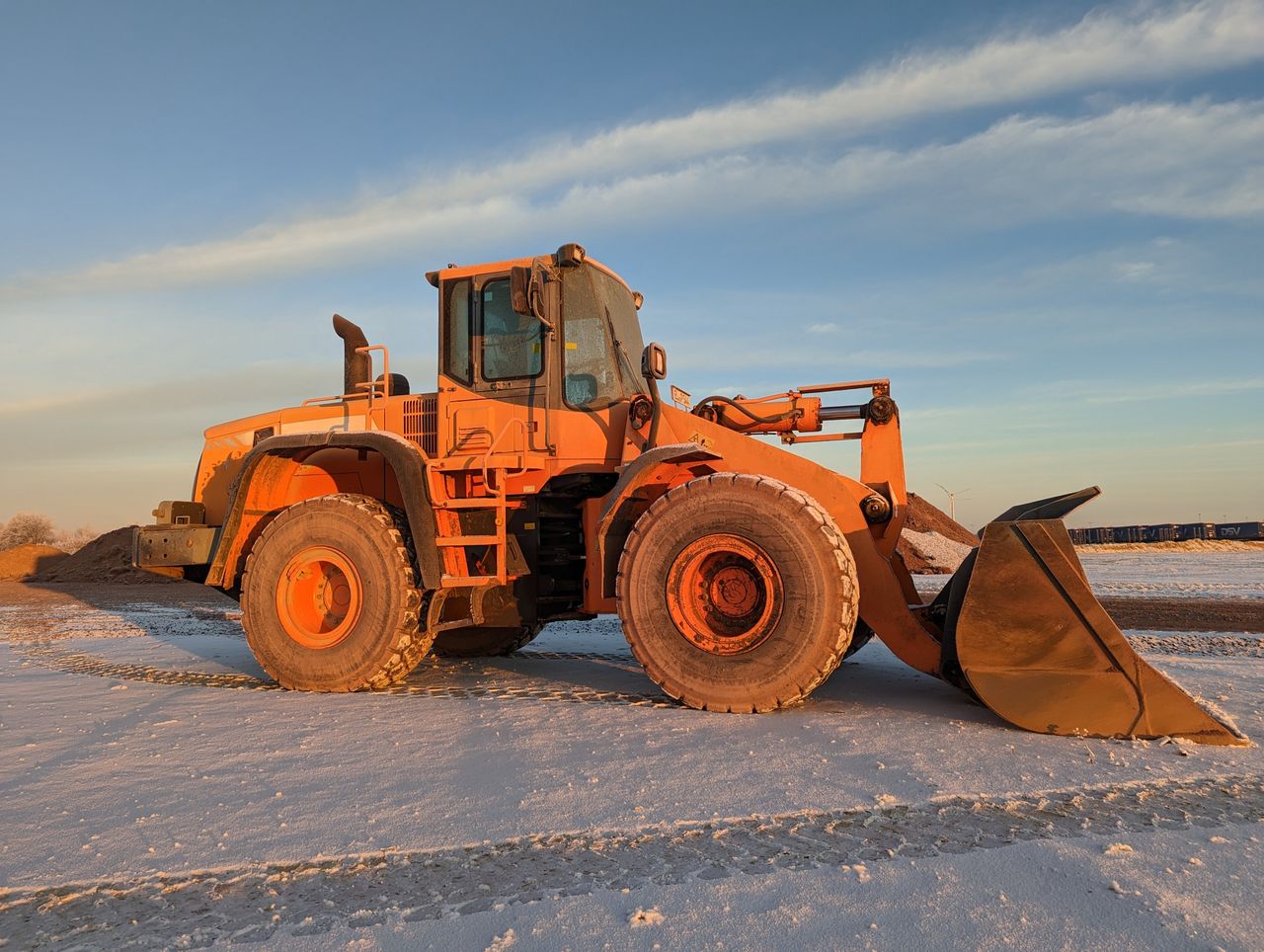
The October checklist
The most cost-effective window for pre-winter service is early October — before ground freeze, and before the rush of emergency calls fills every technician's schedule. A thorough pre-winter inspection for heavy equipment should cover, at minimum:
- Hydraulic fluid analysis and a change to winter-grade fluid where the spec calls for it
- Full cylinder seal inspection — replace marginal seals now, in a heated shop, not during a snowstorm on a job site
- Battery load test and terminal service — cold cranking capacity can drop 30 to 50 percent near minus twenty, so a battery that is fine in October can be dead in January
- Coolant freeze-protection check — typically specced to minus forty for Ontario operations; test it, do not assume it
- Diesel fuel system service — drain the water separator, replace fuel filters, and treat the fuel against gelling
- Block heaters and starting aids — confirm they actually work before the first cold snap, not during it
- Undercarriage and track inspection — frozen, mis-tensioned tracks are a common and expensive catastrophic failure
The numbers operators actually see
The pattern across heavy equipment fleets in our region is consistent: machines that complete pre-winter service see dramatically fewer emergency call-outs between November and March. The economics are not subtle. A planned pre-winter service typically runs in the hundreds to low thousands of dollars per machine. A single emergency winter breakdown — emergency parts, emergency labour, and lost production combined — routinely runs several times that, and it always arrives at the worst possible moment.
Put simply: you are going to spend the money either way. The only choice is whether you spend a known, smaller amount on your schedule in October, or an unknown, larger amount on the weather's schedule in January.
Make it a system, not a scramble
Preventive maintenance only works as a routine, not a reaction. The fleets that ride out an Ontario winter cleanly share two habits:
- They book October service early, before the slots fill, and treat it as non-negotiable.
- They keep service records, so each inspection knows exactly what was marginal last year and watches it this year.
That second habit compounds. After a couple of seasons, the record tells you which machines and which components are your repeat offenders, and you can get ahead of them instead of reacting to them.
Book pre-winter service across the GTA
NIRO Technical Solution provides preventive maintenance and on-site service for heavy equipment across Toronto, the GTA, and Ontario — including mobile service that comes to your yard or job site, so prepping a fleet does not mean hauling every machine to a shop. To get ahead of the cold, request a quote and book your pre-winter inspection before the season fills up.